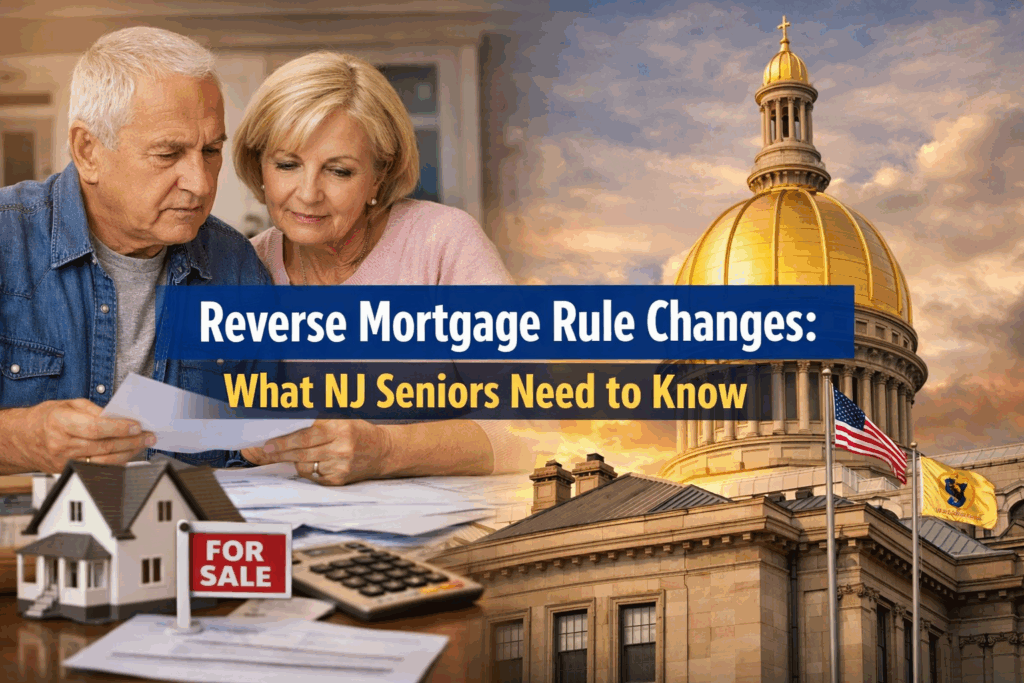
New Jersey lawmakers are considering a technical change to state law that affects how reverse mortgages are treated. While the proposal itself is narrow, it highlights a much bigger issue facing older homeowners across the state: how to access home equity in a high-cost environment, and whether staying put still makes financial sense.
The bill, known as Senate Bill 4970, would clarify that reverse mortgages are exempt from certain repayment rules originally written for traditional second mortgages. This change is being supported by the National Reverse Mortgage Lenders Association, which argues that current law creates unnecessary confusion and risk for lenders and borrowers alike.
For homeowners aged 62 and older, this is a good moment to step back and look at the bigger picture. Reverse mortgages are only one option. For many New Jersey seniors, selling their home can be a simpler and more financially secure path.
Why This Law Is Being Updated Now
New Jersey’s secondary mortgage law requires loans to be repaid in equal monthly installments over a fixed period. That structure works for home equity loans and lines of credit. Reverse mortgages do not operate that way.
With a reverse mortgage:
- Monthly payments are typically not required
- The loan balance increases over time
- Repayment usually occurs when the homeowner sells, moves out permanently, or passes away
Because of this mismatch, reverse mortgages do not fit neatly into the existing statute. Senate Bill 4970 is designed to clean up that inconsistency by clearly exempting reverse mortgages from the equal-payment requirement.
The goal is not to expand reverse mortgages. It is to make state law match how these loans already function under federal guidelines.
What a Reverse Mortgage Really Means for Homeowners and Families
Reverse mortgages can help some homeowners stay in their homes longer, but they are not free money. They come with real tradeoffs that families often do not fully consider upfront.
Important realities include:
- Closing costs and ongoing fees that reduce equity
- Interest that compounds over time
- Limits on how long you can leave the home vacant
- Reduced inheritance for heirs unless the home appreciates significantly
When the homeowner eventually passes away or moves out, heirs are faced with decisions that often involve selling the property anyway. In many cases, the home must be sold within a specific timeframe to repay the loan.
This is why reverse mortgages frequently show up during probate sales, estate cleanouts, and time-sensitive listings.
When Selling the Home Can Be the Better Option
For many older homeowners in New Jersey, selling offers clarity that borrowing against the home cannot.
Selling may be the better choice if:
- Property taxes, insurance, and maintenance are becoming overwhelming
- You want to unlock all of your equity, not just a portion
- You are planning a move to assisted living, downsizing, or relocating
- You want to simplify things for your children or heirs
- The home needs repairs you no longer want to manage
By selling, homeowners can:
- Eliminate monthly ownership costs
- Access their full equity in one transaction
- Reduce stress tied to upkeep and compliance
- Plan the next phase of life on their own terms
In today’s New Jersey market, many long-time homeowners are sitting on substantial equity. Converting that equity into flexibility can be life changing.
What This Means If You Are Deciding What to Do Next
The discussion around Senate Bill 4970 is a reminder that financial tools for seniors are becoming more complex, not simpler. That makes it even more important to understand all your options before committing to one path.
A reverse mortgage might help in certain situations. In others, it simply delays a sale while adding layers of cost and complexity.
There is no single right answer. There is only the right answer for your finances, your health, and your family.
Talk to a Local Expert Before Making a Big Decision
At NJ House Partners, we specialize in helping older homeowners navigate these exact decisions. Whether you are considering a reverse mortgage, thinking about selling, or just unsure what comes next, we offer clear guidance without pressure.
We help homeowners who want:
- A straightforward explanation of their options
- A fast and respectful home sale, if that is the right move
- Help coordinating with family members or attorneys
- Relief from rising property taxes, maintenance, and insurance costs
Ready to explore your options?
- Request a no-obligation home value review
- Talk through selling now versus staying put
- Get a clear plan that fits your goals, not someone else’s agenda
Your home represents years of hard work. Make sure the next step honors that investment.